Thanksgiving often brings to mind images of family gathered around a table, shared meals, familiar traditions, and opportunities to reconnect. But for many people, the holiday can bring a much more complicated set of experiences. Family relationships may be strained, important people may be missing, traditions may have changed, and the expectation of togetherness may highlight feelings of loneliness or disconnection.
From an Ecosystemic Structural Family Therapy (ESFT) perspective, Thanksgiving offers an opportunity to think about something bigger than who is sitting around the dinner table:
1.Who makes up our village?
2. Where do we experience connection, belonging, and support?
One tool that helps us explore these questions is the ecomap.
An Ecomap Is More Than a Picture of Who We Know
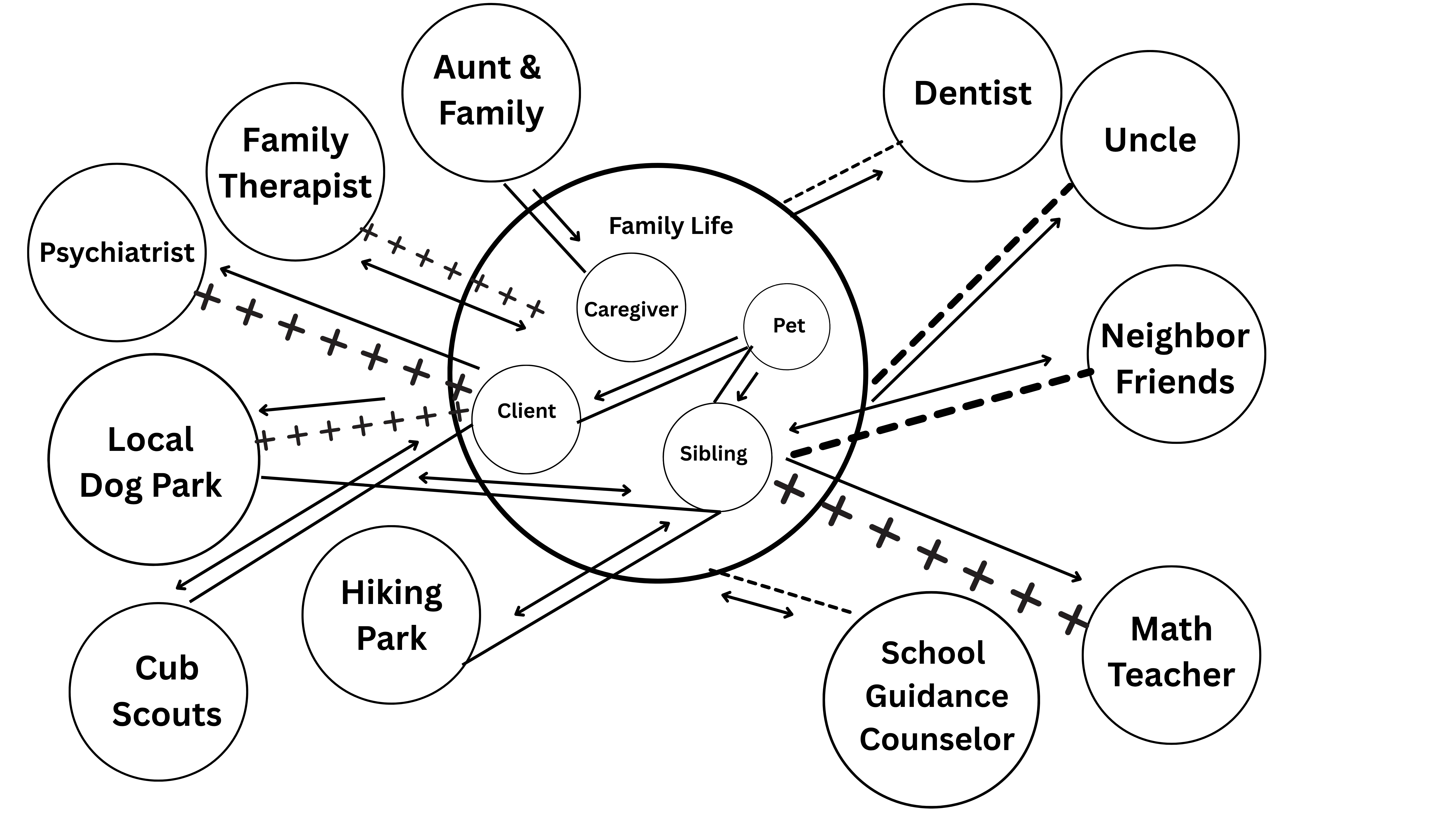
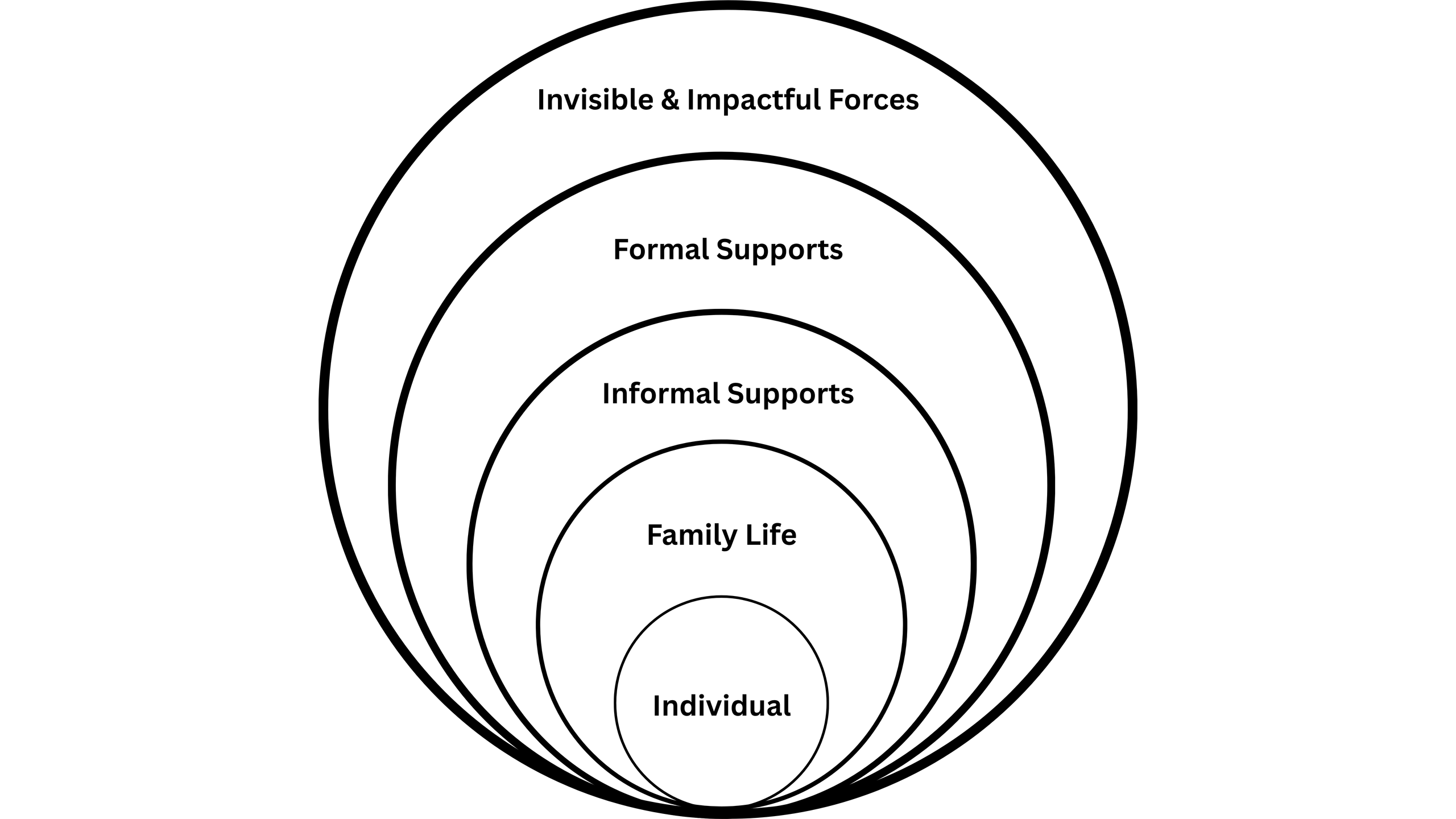
In family therapy, an ecomap helps us understand the relationships and ways that connections exist between an individual, family and their broader social ecology. It allows us to identify the people, places, organizations, activities, and communities that influence our lives.
An ecomap can help us explore:
- Who provides emotional support, encouragement, and a sense of belonging?
- Where do we experience acceptance, safety, and connection?
- Which relationships feel reciprocal, and which feel draining or stressful?
- What communities or activities help us feel connected to something meaningful?
- Where are there gaps in support, and what opportunities exist to strengthen our connections?
When we think about Thanksgiving, we often focus on family relationships. But our social ecology is much larger than our family of origin or the people who share our last name.
Our village may include friends, neighbors, coworkers, teachers, faith communities, support groups, coaches, colleagues, community organizations, the neighbor’s dog, flower garden, or front porch and even the places and activities that bring us joy and meaning. Most importantly, we don’t have to get everything we need from just one person, one relationship, or one family gathering.
Thanksgiving Can Reveal Both Strengths and Disconnections
For some families, Thanksgiving is a time of warmth and connection. For others, it can bring tension, unresolved conflict, grief, or reminders of relationships that are no longer available. An ecomap gives us an opportunity to look at these experiences without assuming that every family connection is supportive or that every person needs to be included in every gathering.
For example, a young adult may feel disconnected from their family of origin but experience a strong sense of belonging with friends, coworkers, or a chosen family. A caregiver may feel overwhelmed by family responsibilities but find meaningful support through a neighborhood organization or parent group. A child may experience connection through a coach, teacher, or community activity that provides consistency and encouragement. These connections matter.
From an ESFT perspective, we want to understand not only where disconnection exists, but also where connection is already happening. What relationships provide a sense of safety? Where does someone feel seen and valued? What strengths and resources can we build upon? Sometimes, the most important discovery is realizing that a person has more support available than they initially recognized.
Expanding Our Definition of Family
One of the most meaningful things an ecomap can help us recognize is that family is not limited to the people who gather around our holiday table.
Family and connection can be experienced through relationships that are chosen, developed, and maintained over time. For individuals who have experienced rejection, trauma, loss, or estrangement, these relationships may be particularly important. The people who provide acceptance and affirmation may not always be the people others expect. Rather than assuming who should be supportive, we need to ask who actually is supportive. An ecomap helps us make those relationships visible and consider how they might be strengthened.
Connection Is Not Just About People
Another important reminder is that connection does not stop with relationships.
We can experience connection through places, activities, traditions, interests, and communities. A favorite park, a volunteer opportunity, a sports team, a creative outlet, or a meaningful holiday tradition can provide a sense of continuity and belonging.
For someone who is struggling with relationships, these connections can be an important starting point. They offer opportunities to experience joy, purpose, and engagement without requiring every relationship to be repaired or every family conflict to be resolved. In fact, expanding our connections can make difficult relationships and circumstances more manageable. When our entire sense of belonging depends on one person or one family system, disconnection can feel overwhelming. A broader social ecology creates additional sources of support and meaning.
A Thanksgiving Reflection: Who Is in Your Village?
This Thanksgiving, consider thinking beyond who will be sitting at your table; who are you grateful for that is not sitting at your table? Who makes you feel valued? Where can you be yourself? Who shows up when things get difficult? What activities bring you a sense of purpose? What communities help you feel connected? Are there relationships you would like to strengthen, or new connections you would like to explore?
You might even try creating a simple ecomap of your own. Place yourself or your family in the center. Then begin adding the people, places, activities, and communities that are part of your life. Consider which connections are strong, which are stressful, which are missing, and where there may be opportunities to build something new. You may discover that your village is larger, more diverse, and more supportive than you realized.
The ESFT Connection: Strengthening the Social Ecology
In ESFT, we recognize that families do not exist in isolation. Their strengths, challenges, and opportunities for change are influenced by the relationships and resources surrounding them. The ecomap helps therapists and families move beyond a narrow focus on individual symptoms or family conflict. It encourages us to see the larger picture, identify existing strengths, and consider how the social ecology can become a resource for healing and growth.
As we enter the holiday season, let’s remember that connection can take many forms. Sometimes it is found around a crowded dinner table. Sometimes it is found in a quiet conversation with a friend, a welcoming community, a familiar activity, or a place where we feel at home.
This Thanksgiving, perhaps the question isn’t simply, “Who is coming to dinner?” It is, “Where do I experience connection, and how can I continue to grow my village?” Because ultimately, strengthening connection is about more than having people around us. It is about having places, relationships, and experiences that remind us that we belong.