Category: Shared News

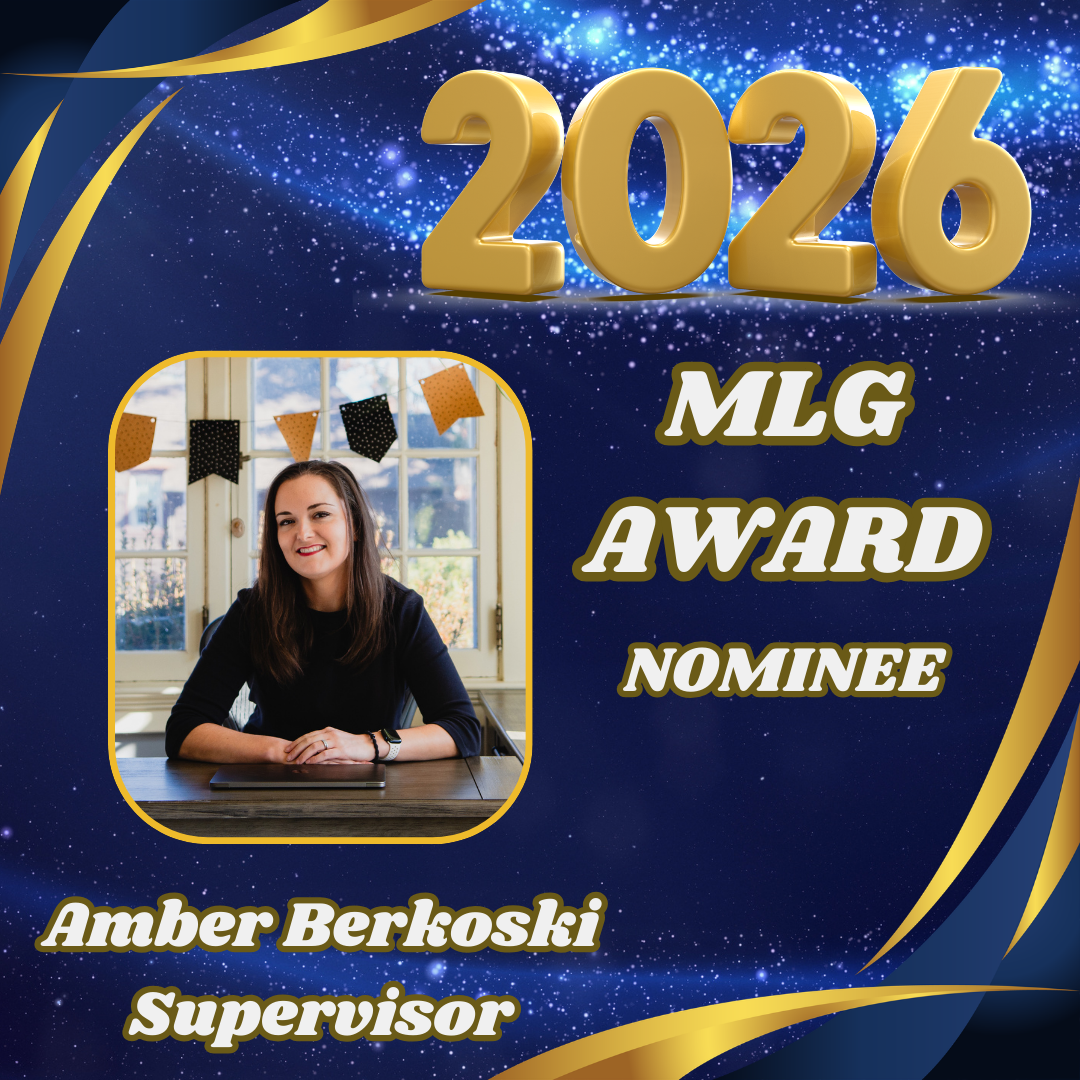
  • 2026 Marion Lindblad-Goldberg Award Nominee – Supervisor Becca Bowman

    #MLGAwardNominee #ESFT-FBMHS #systemicthinker

    We are proud to recognize Becca Bowman as a nominee for the 2026 Marion Lindblad-Goldberg (MLG) Award in the Supervisor category. Becca’s leadership reflects a deep and sustained commitment to the five core values that define this award.

    Maintains a Systemic Perspective

    Becca consistently approaches supervision through a systemic lens. She helps clinicians hold awareness of the whole ecosystem—family dynamics, organizational context, and their own developmental edge—while thoughtfully addressing the parts. Her supervision moves beyond isolated interventions and instead works to fosters second-order change across systems.

    Balances Professional Boundaries with Collaborative Relationships

    Becca creates a supervisory environment where clinicians feel visible, valued, and worthy. At the same time, she maintains clear professional boundaries that promote accountability and growth. Her leadership reflects a powerful balance—supportive yet challenging, collaborative yet grounded in expertise. This balance strengthens competence and builds professional confidence.

    Engages in Social Ecology

    Becca models deliberate authenticity in her leadership. She demonstrates awareness of how identity, context, and lived experience shape both clinicians and families. By encouraging reflection and self-awareness, she fosters growth that is relational, contextual, and grounded in the realities of the systems in which clinicians operate.

    Makes the Most of Intensity and Crises

    Rather than retreating from difficult moments, Becca uses them as opportunities for development. She helps clinicians recognize their capacity in high-intensity situations and guides them in responding with intentionality rather than reactivity. Her steady presence during challenge reinforces the belief that growth is often forged in complexity.

    Assesses with Complexity While Acting with Simplicity

    Becca’s understanding of people and systems is nuanced and genuine. Yet those she supervises experience her communication as clear, grounded, and accessible. She translates complexity into actionable guidance, helping clinicians feel capable and focused rather than overwhelmed.

    Through her commitment to these five values, Becca Bowman fosters confidence, competence, and professional growth within her team. Her leadership strengthens clinicians, enhances systems, and ultimately supports better outcomes for families.

    We are honored to celebrate Becca as a 2026 MLG Award nominee and grateful for the intentional, authentic supervision she provides every day.

  • 2026 Marion Lindblad-Goldberg Award Nominee – Staff Cassie Chase

    #MarionLindblad-GoldbergAward #ESFT # Systemicthinking

    I am honored to nominate Cassie Chase for the 2026 Marion Lindblad-Goldberg (MLG) Award – Staff. When Cassie is present in training spaces, the spirit of Marion Lindblad-Goldberg is present as well. Cassie embodies a deep commitment to honoring people with respect, curiosity, and kindness while simultaneously supporting the growth and development of her peers and the systems around her.

    Maintains a systemic perspective
    Cassie consistently demonstrates a strong systemic lens, holding awareness of the whole while thoughtfully working with the parts. In training, she naturally attends to isomorphic processes across treatment, supervision, and learning environments. Her reflections and questions reveal an ability to connect individual experiences to broader relational patterns, helping others see how their work fits within larger systems. Cassie does not simply apply tools—she understands how and why they matter within the ecosystem.

    Balances professional boundaries with collaborative relationships
    Cassie is a leader in modeling collaboration, particularly through her use of the Collaboration Scale. She balances confidence in her professional knowledge with humility and openness, creating space for shared learning. Rather than positioning herself as an expert, she invites others into the process, fostering trust and competence across the group. Her leadership is authentic, relational, and grounded in a strength-based approach that uplifts those around her.

    Engages deeply in social ecology
    Cassie demonstrates a clear appreciation for social ecology and lived experience. She reflects thoughtfully on how her own context, growth edges, and support systems inform her professional work. She actively engages in deliberate practice, using feedback, supervision, and peer collaboration to stretch herself developmentally. Her willingness to be reflective and transparent strengthens the learning environment and normalizes growth for others.

    Makes the most of intensity and challenge
    Cassie views moments of struggle, uncertainty, and intensity as opportunities for growth. In training spaces, she helps shift discomfort into meaning-making by staying grounded and relational. She demonstrates facilitative leadership by keeping second-order change in focus—encouraging curiosity, bravery, and new relational patterns when others feel stuck. Her presence helps regulate the system and move it forward.

    Assesses with complexity while acting with simplicity
    Cassie brings a sophisticated understanding of systemic assessment tools while communicating and acting in ways that feel accessible and validating. She continues to challenge herself to work smarter, not harder, using family assessment tools and the collaboration scale with intention and clarity. While her conceptualizations are complex, her actions are clear, relational, and deeply human—making learning feel possible for everyone in the room.

    Cassie Chase has become a quiet but powerful leader in training spaces. Her presence is a difference-maker for each cohort she joins. Through her authenticity, insight, and commitment to systemic growth, she fosters courage and connection in others. She exemplifies the values and legacy of Marion Lindblad-Goldberg in both spirit and practice.

  • 2026 Marion Lindblad-Goldberg Award Nominee: Staff Ashlie Girty

    #MarionLindblad-GoldbergAward2026 #ESFT #systemicthinking

    I am honored to nominate Ashlie Girty for the 2026 Marion Lindblad-Goldberg (MLG) Award. Over the past year, Ashlie has truly blossomed—demonstrating meaningful growth in her leadership, clinical confidence, and systemic thinking. Her development reflects not only a deep respect for the ESFT model, but also a courageous commitment to engaging her growth edges in service of families and systems.

    Maintains a systemic perspective
    Ashlie consistently demonstrates an appreciation for the isomorphic process across training, treatment, and supervision. Her presence in the training room reflects an ability to hold awareness of the whole while thoughtfully attending to the parts. Through her observations and reflections, Ashlie brings clarity and calm to complex discussions, helping others slow down and see patterns within systems rather than focusing solely on individual behavior.

    Balances professional boundaries with collaborative relationships
    Ashlie leads with a gentle, supportive presence that fosters trust and psychological safety. At the same time, she has intentionally worked to strengthen her ability to challenge within relationships—using family assessment tools as a guide rather than relying solely on support or reassurance. This balance allows her to collaborate authentically while maintaining professional clarity, sending a powerful message to families and colleagues alike: growth happens within connection, not at the expense of it.

    Engages deeply in social ecology
    Ashlie demonstrates a strong commitment to understanding how her own social ecology. She actively seeks collaboration with her supervisor and peers, using these relationships as spaces for deliberate practice and reflection. Her willingness to engage honestly in learning—particularly around discomfort and uncertainty.

    Makes the most of intensity and challenge
    Ashlie has shown remarkable courage in leaning into intensity rather than avoiding it. Her unwavering commitment to videotaping sessions and using feedback as a tool for growth exemplifies her ability to view struggle as an opportunity for development. Through this process, she has taken positive, thoughtful risks that empower clients and reinforce their capacity for change. Her approach reflects facilitative leadership that keeps second-order change at the forefront.

    Assesses with complexity while acting with simplicity
    Ashlie’s use of the ESFT model and family assessment tools reflects a growing ability to conceptualize cases with depth while responding in ways that feel accessible, calm, and validating. Though her understanding of relational dynamics is increasingly complex, her actions remain grounded and clear. Families and colleagues experience her as warm, steady, and respectful—someone who makes challenging work feel possible.

    Ashlie Girty’s presence in training has brought peace, warmth, and steadiness to the learning environment. Her growth over the past year has been both intentional and impactful, marked by humility, courage, and a deep commitment to systemic practice. She embodies the relational heart of ESFT and the developmental spirit of the Marion Lindblad-Goldberg Award.

  • How would Ecosystemic Structural Family Therapy (ESFT) would use family assessment tools to understand a family when tantrums (or any dysregulated behavior) are present?

    #image_title

    Tantrums signal the distress:

    • I’m overwhelmed.
    • I’m trying to tell you about a need I have.
    • I’m possibly hungry, tired, overwhelmed, lonely, or angry and I don’t know how to handle that yet.
    • I need to learn a new way to ask you for this need when I am calm.
    • I’m new at figuring out big feelings.
    • My brain can’t understand you when I’m feeling this much emotion.
    • I need you to be calm so I can figure out these feelings.
    • I don’t want to be acting this way.
    • I’m watching how you respond to my big feelings so I know how to respond next time.
    • I love you and feel safe with you.


    Understanding Tantrums Systemically

    In ESFT, a child’s tantrum is not viewed as an isolated behavioral problem, but as a signal of relational and systemic distress within the family. The therapist’s task is to uncover what the behavior is communicating about the family’s functioning, emotional regulation, and attachment patterns. To do that, ESFT clinicians rely on family assessment tools that help organize both data and hypotheses about family structure, meaning, and context.


    1. Structural Map

    A structural map helps the therapist visualize family hierarchies, subsystems, and boundaries.

    • Question: Who holds power in this system? Who regulates whom?
    • Application: A child’s tantrums may reveal an inverted hierarchy—perhaps the child has taken on a leadership or caregiving role due to weak parental alignment. The therapist uses this map to target parental leadership as a treatment goal.

    2. Genogram

    The genogram offers a multi-generational view of patterns, roles, and emotional themes.

    • Question: How has emotion been managed across generations?
    • Application: If a parent grew up in a family where emotional expression was punished, they may struggle to tolerate their child’s big feelings. This insight helps the therapist reframe the tantrum as a learned systemic response rather than defiance.

    3. Ecomap

    An ecomap situates the family within their broader social ecology—schools, community supports, stressors, and resources.

    • Question: How do external systems impact the family’s capacity to regulate and connect?
    • Application: Chronic financial stress or social isolation might amplify dysregulation. The therapist identifies potential supports and incorporates them into the treatment plan.

    4. Critical Events Timeline

    This tool tracks significant family stressors, transitions, and traumas over time.

    • Question: What events preceded the escalation of tantrums? What strengths exist to help caregivers maintain self regulation and leadership?
    • Application: If tantrums increased after a loss, move, or separation, the therapist links behavior to attachment disruptions and works to strengthen co-regulation and caregiver attunement.

    5. Negative Interactional Patterns ( NIP) & Positive Interactional Pattern (PIP)

    These patterns identify how members respond to one another based on the structural map at admissions and how the members respond when the family is unbalanced and second order change occurs.

    • Question: What is the pattern that binds the family in crisis? What is the pattern that frees the family from crisis?
    • Application: A tantrum might trigger parental withdrawal, reinforcing the child’s fear of disconnection. The therapist works to interrupt this sequence through enactments that promote repair and attachment, alliances, co parenting, parental leadership and co-regulation.

    In Summary

    Using these tools, the ESFT therapist doesn’t just describe a child’s tantrum—they contextualize it. The behavior becomes a portal into understanding family structure, attachment, and emotional organization. The treatment goal shifts from stopping the tantrum to restoring relational balance so the family can regulate together.

    Come to our free CE workshop

  • Welcome to the Team!

    Zoë will be managing the learning portal, certificates, evaluation analysis, and training course access.

    Zoë Rogers is a versatile and passionate wellness professional dedicated to supporting others on their journey toward health, balance, and personal growth. As the owner of 333 Divinity, she blends her expertise as a certified life coach, Reiki practitioner, licensed massage therapist, and esthetician to create personalized healing experiences for her clients.

    Zoë holds certifications in Reiki (Levels I–III), Health & Life Coaching, Medical Massage, Cupping, Hydrotherapy, Clinical Massage, and Stretch Therapy. She completed her training at Cortiva Institute, earning licensure as both a massage therapist and esthetician.

    With a professional background that spans wellness, customer service, and team leadership. Zoë brings strong communication, organization, and interpersonal skills to every environment she works in. Whether managing pop-up events or providing therapeutic bodywork, she leads with empathy, integrity, and an unwavering commitment to client care.

    Her approach combines intuitive energy work with practical coaching strategies, helping individuals increase their quality of life and achieve meaningful personal goals.

    Rachael will be managing video editing for continuing education programs and Homestudy course build outs.

    Rachael Roberts, M.S., is a dedicated and compassionate human services professional with over 20 years of experience supporting children, youth, and families. She holds a Master of Science in Human Services with a specialization in Counseling Studies from Capella University, and a B.S. in Human Development and Family Studies from Penn State University.

    Rachael currently serves as a Lead Teacher at Lower Providence Presbyterian Preschool, where she designs and implements curricula and collaborates with families and mental health providers to ensure holistic care for young children. Her previous roles include Child & Adolescent Outpatient Therapist and Case Manager Supervisor at the Devereux Foundation, where she provided therapeutic services and led teams delivering critical behavioral health supports.

    Known for her empathy, leadership, and deep understanding of child development, Rachael combines clinical insight with practical classroom strategies to support emotional wellness and academic readiness. She is also skilled in coordinating care, crisis intervention, and advocating for children’s mental health across home, school, and community settings.

    In addition to her clinical and educational expertise, Rachael brings strong technical skills in communication, documentation, photography and digital content creation, including website design and social media outreach.

  • AND THE RECIPIENTS OF THE 2025 MLG AWARD ARE….

    🌟 Honoring a Legacy, Celebrating a Community 🌟

    Before we announce the recipients of this year’s Marion Lindblad-Goldberg (MLG) Award, we want to pause and honor what this award truly represents.

    Dr. Marion Lindblad-Goldberg’s vision shaped the foundation of Ecosystemic Structural Family Therapy (ESFT) and transformed the landscape of Family Based Mental Health Services. Her work reminds us that healing happens in relationships—and that our most powerful tool as clinicians is the ability to see the whole system, join with families in their distress, and lead with compassion, clarity, and integrity.

    Each of this year’s nominees embodies that legacy in their own way—through their commitment to growth, their systemic insight, and their unwavering dedication to the families they serve.

    This moment isn’t just about who receives the award—it’s about celebrating the collective strength, heart, and brilliance of this entire community.

    💙 Please join us in recognizing the incredible nominees for the 2025 MLG Award—you are the living legacy of Marion’s work.

    #MLGAward #ESFT #SystemicFamilyTherapy #RelationalHealing #FamilyTherapy #PCFTTC #TherapistRecognition #LegacyOfHealing #MLG2025

  • Celebrating Kim D. : A 2025 Marion Lindblad-Goldberg Award Nominee

    At the Philadelphia Child and Family Therapy Training Center, we are thrilled to recognize Kim D. as a nominee for the 2025 Marion Lindblad-Goldberg (MLG) Award. This award honors professionals who demonstrate exceptional clinical skill, a commitment to systemic family therapy, and a deep dedication to strengthening families through relational healing. Kim embodies these qualities in every aspect of her work.

    A Systemic Thinker and Team Supporter

    Kim plays a pivotal role in group supervisions, offering her insight to help teams view cases through a systemic lens. She consistently highlights systemic barriers and influences, ensuring that cases are understood beyond the individual level and within the context of larger relational and structural dynamics. Her ability to support and challenge her colleagues fosters a culture of growth and deeper understanding.

    Balancing Boundaries with Compassion

    Over the years, Kim has shown tremendous growth in her ability to balance professional boundaries while maintaining strong collaborative relationships. With a genuine and caring heart, she is always willing to support those in need. However, what sets Kim apart is her ability to model boundaries in a way that is both kind and respectful, teaching families how to create healthy relationship dynamics within their own systems.

    Connecting Families to Their Communities

    Kim understands the power of social ecology and actively works to connect families to their communities and available resources. By helping families tap into their natural support networks, she ensures that they are not only receiving clinical support but are also building sustainable connections that will continue to benefit them long after therapy concludes.

    Guiding Families Through Crisis and Change

    Kim’s ability to support families through crisis is one of her most defining strengths. She remains calm and grounded during difficult moments, guiding families toward stability and healing. She encourages families to identify and strengthen their positive interactional patterns, fostering long-term change and resilience.

    A Master of Case Conceptualization and Intervention

    Kim’s clinical insight allows her to conceptualize cases at multiple levels, seeing the complexities of family dynamics with clarity and precision. She is skilled at identifying key enactments and reframes, using them to help families shift perspectives and engage in healthier interactions. Her ability to translate theory into meaningful, real-world interventions makes a lasting impact on the families she serves.

    A Well-Deserved Honor

    Kim DiPiazza is a shining example of what systemic family therapy can achieve. Her dedication to her clients, her colleagues, and the broader community exemplifies the very essence of Ecosystemic Structural Family Therapy (ESFT).

    We are proud to celebrate Kim as a 2025 MLG Award nominee and look forward to seeing her continued impact in the field.

    Congratulations, Kim! 🎉

  • Honoring Kathy Gasparetti: A 2025 Marion Lindblad-Goldberg Award Nominee

    The Philadelphia Child and Family Therapy Training Center is thrilled to celebrate Kathy Gasparetti’s nomination for the 2025 Marion Lindblad-Goldberg (MLG) Award. This prestigious honor recognizes professionals who embody the principles of Ecosystemic Structural Family Therapy (ESFT) through their leadership, clinical expertise, and dedication to strengthening families.

    A Leader Among Her Peers

    Kathy Gasparetti is more than just a seasoned clinician—she is a pillar of leadership within PA Mentor. With over eight years of experience in Family-Based Services (FBS), she has earned the respect of her colleagues and serves as an anchor within her department. Her influence is undeniable; when leadership introduces a new policy or initiative, her team instinctively looks to Kathy, recognizing her as both a mentor and role model.

    Her leadership has only grown in her new role as supervisor. Though still early in this phase of her career, Kathy has embraced the challenge with an astonishing ability to learn, adapt, and lead with confidence. She not only upholds the integrity of the ESFT model but actively shapes the culture of her department through her guidance, wisdom, and unwavering support of her team.

    A Therapist Who Inspires

    Beyond her leadership, Kathy is an exceptional clinician. Those who have had the opportunity to observe her work describe it as breathtaking—a seamless blend of compassion and firmness that creates transformative change in the families she serves. She embodies the essence of family therapy, demonstrating deep empathy while holding families accountable for growth and healing.

    As a supervisor, Kathy continues to “do therapy” with her teams, modeling therapeutic techniques, providing thoughtful mentorship, and offering steadfast encouragement to newer clinicians. When a struggling therapist recently needed extra support, Kathy volunteered to mentor them, a gesture that left the individual feeling honored to receive one-on-one time with someone they deeply admired.

    A Well-Deserved Nomination

    Kathy Gasparetti exemplifies the best of family therapy. She is a leader, mentor, clinician, and role model whose impact extends beyond her caseload to shape the future of the profession. Her journey is just beginning, yet she has already demonstrated an unparalleled commitment to systemic work and the families she serves.

    We are proud to celebrate Kathy’s nomination for the 2025 Marion Lindblad-Goldberg Award and extend our deepest gratitude for her dedication, passion, and leadership. PA Mentor is lucky to have her, and so is the field of family therapy.

    Congratulations, Kathy! 🎉

  • Celebrating Danitza Ortiz-Rivera: A 2025 MLG Award Nominee

    We are proud to announce that Danitza Ortiz-Rivera has been nominated for the 2025 Marion Lindblad-Goldberg (MLG) Award, recognizing her exceptional contributions to the family-based mental health field and her deep commitment to the ESFT model.

    With seven years of experience in family-based services, Danitza has proven to be an invaluable asset to her team, families, and community. She has played a key role in supporting her newest supervisor, assisting in the incorporation of the ESFT model into supervision practices. Her strong understanding of the isomorphic process has allowed her to integrate assessment tools, apply knowledge, and continually seek opportunities for professional growth.

    Danitza’s impact extends beyond her immediate team—she actively collaborates with outside agencies to ensure families receive comprehensive, systemic support. She is especially skilled in maintaining healthy boundaries and guiding families through positive changes in their Negative Interactional Pattern (NIP). Her ability to engage in the social ecology of families, while also drawing from her own lived experiences, allows her to connect deeply and authentically with those she serves.

    One of Danitza’s greatest strengths is her intentionality. She deliberately engages families in therapeutic work outside of crisis moments, encouraging meaningful exploration of their Positive Interactional Pattern (PIP). She utilizes assessments as a tool for transformation, ensuring that every step of the therapeutic process is rooted in the true essence of family-based services.

    Danitza’s passion for learning is evident in the way she actively seeks growth through supervision, training, and peer collaboration. She is not only committed to her own professional development but also dedicated to enhancing the field of family-based mental health as a whole.

    For her steadfast dedication, systemic insight, and unwavering commitment to the ESFT model, we proudly celebrate Danitza Ortiz-Rivera’s nomination for the 2025 MLG Award. Her work has left a lasting impact on families, colleagues, and the field, and we are honored to recognize her for this well-deserved distinction.

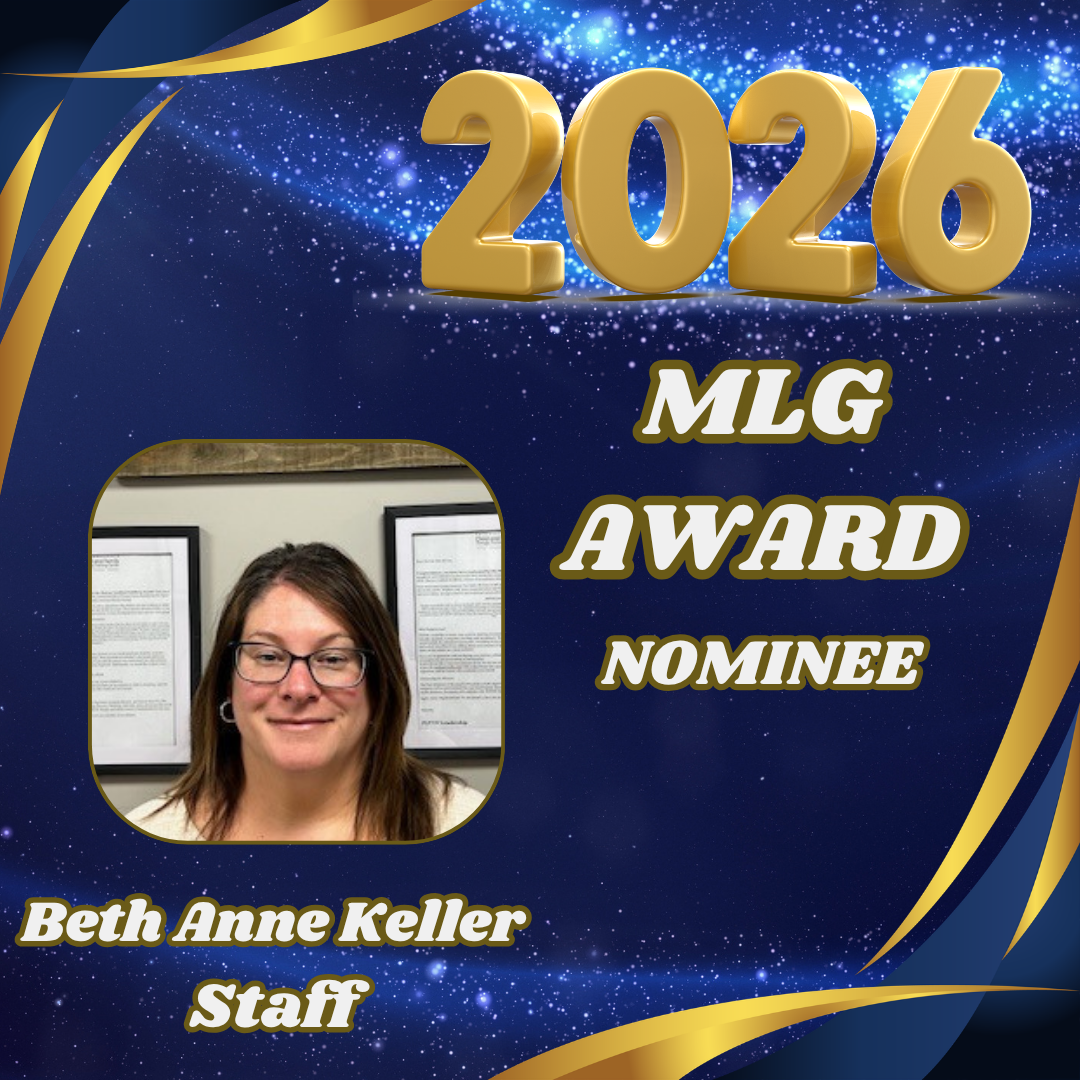
  • Honoring Beth Anne K.: A Nominee for the 2025 Marion Lindblad-Goldberg Award

    We are thrilled to announce that Beth Anne Keller has been nominated for the 2025 Marion Lindblad-Goldberg (MLG) Award, recognizing her outstanding dedication, leadership, and expertise in the Ecosystemic Structural Family Therapy (ESFT) model.

    With over 15 years of service, Beth Anne has been a cornerstone of the agency, beginning as a Mental Health Worker and rising to Program Coordinator. Throughout her tenure, she has played a pivotal role in training, supervision, and program development, demonstrating an exceptional ability to translate complex ESFT principles into practical, accessible learning experiences.

    Beth Anne’s extensive knowledge of the ESFT model has made her an invaluable asset to both new and experienced staff. She works collaboratively with the Program Director, ensuring that the core values of systemic family therapy are upheld with integrity and fidelity. Whether in supervision, training sessions, or direct support to therapists, Beth Anne consistently provides clarity, structure, and a strengths-based perspective, fostering an environment of learning and growth.

    One of Beth Anne’s greatest strengths is her ability to bridge complexity with simplicity—a skill that allows her to break down intricate ESFT concepts in a way that is both meaningful and applicable. She embraces the social ecology of families and teams, guiding staff in assessments, treatment planning, and collaborative interventions with intentionality and purpose. Her leadership ensures that the ESFT model is not only understood but effectively implemented in a way that transforms the lives of families.

    Beyond her technical expertise, Beth Anne’s willingness to teach, mentor, and inspire has made her an essential force in the program’s continued success. She cultivates learning through curiosity and integrity, always encouraging therapists to explore, reflect, and refine their clinical practice.

    For her unwavering commitment to systemic family therapy, dedication to staff development, and passion for advancing the ESFT model, we proudly celebrate Beth Anne Keller’s nomination for the 2025 MLG Award. Her contributions have left an indelible mark on the agency and the families we serve, and we are honored to recognize her for this well-deserved achievement.