
Author: Jennifer Benjamin
-
🎉 What an Incredible Weekend at GAMFT 2025! 🎉
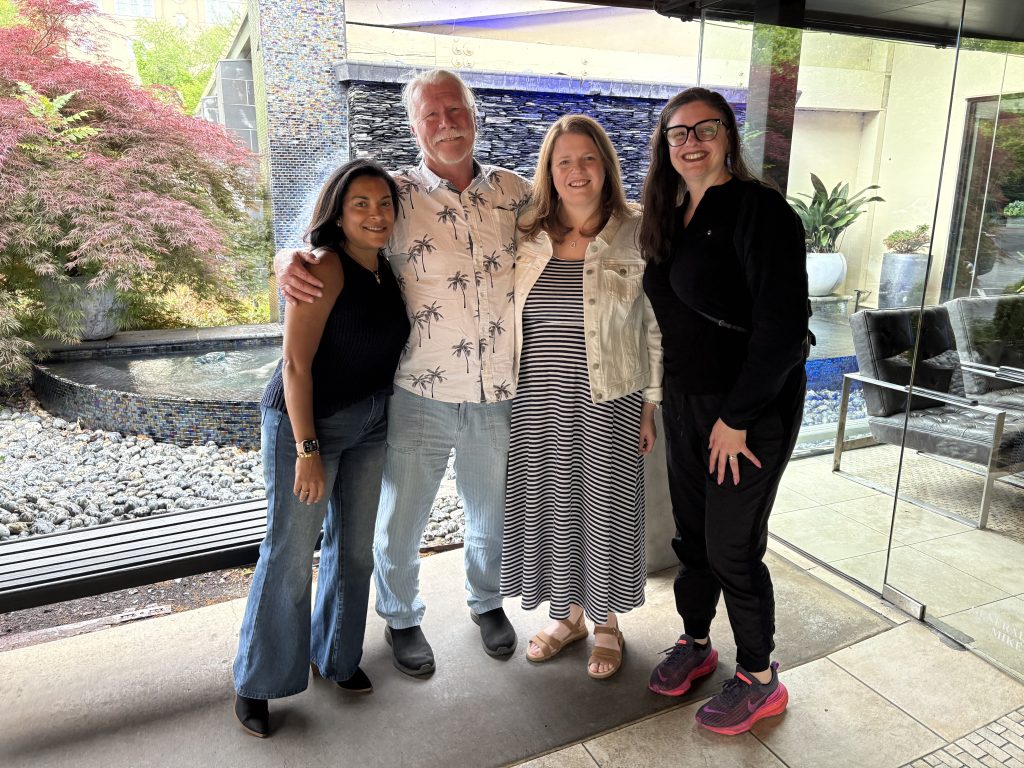
The Philadelphia Child and Family Therapy Training Center (PCFTTC) had an amazing time training and connecting at the GAMFT 2025 Spring Conference in Atlanta!
From Dr. Steve Simms’ inspiring keynote on the power of clinical supervision, deliberate practice and systemic family therapy principles, not to mention the energy, passion, and dedication from everyone in attendance was truly unforgettable. 🌟
We’re leaving Atlanta feeling recharged, inspired, and even more committed to strengthening the systemic family therapy community. A huge THANK YOU to all the brilliant systemically trained family therapists, supervisors, and leaders we had the privilege to meet — the new connections and conversations we formed this weekend will ripple forward in exciting ways! 🌱
PCFTTC is proud to be part of a growing network that believes in collaboration, systemic thinking, and building stronger, more resilient families and communities.
Stay tuned — May’s newsletter will share more of this incredible weekend!!!
#GAMFT2025 #SystemicFamilyTherapy #PCFTTC #ProfessionalGrowth #ClinicalSupervision #BuildingConnections #FamilyTherapy #TherapistCommunity
-
💡 Why a Strength-Based, Relational Approach Matters💡

When families are navigating behavioral challenges — whether it’s a child acting out, conflict between siblings, or ongoing tension between caregivers — the natural impulse is to turn to the therapist as the “expert” to fix the problem. In that moment, families often believe that they have little to offer, that the solution must come from outside of them, and that their relationships and history have little to do with the issue at hand.
But as systemic family therapists, we know that this approach is incomplete. In fact, it can be harmful. When families start to believe they are powerless in the face of problems, they become passive observers rather than active participants in their own growth. And when therapists reinforce this dynamic — intentionally or not — we rob families of their agency and diminish the power of the relational system.
A strength-based, relational approach turns this on its head.
Rather than focusing solely on what’s broken, we look for what’s working — the small moments of connection, care, resilience, and effort that already exist within the family system. We ask ourselves:
- Where are the strengths hiding in plain sight?
- How can we build on those to address behavioral challenges together?
- What has this family survived, overcome, or adapted to before?
This perspective allows us to solve problems relationally, not just behaviorally. A child’s acting-out behavior isn’t addressed in isolation but understood within the context of relationships, stressors, patterns, and roles in the family. We see behavior as communication, shaped by the family’s environment, expectations, and connection.
When families experience this shift, everything changes. They stop waiting for the expert to deliver answers and begin participating in creating solutions. They regain a sense of capability and confidence, recognizing that their relationships are not only part of the problem — but the foundation of the solution.
At PCFTTC, we believe that every family holds the raw material for their own healing. Our role is to uncover, name, and strengthen those existing resources while guiding families toward healthier, more connected ways of being together.
Strength-based, relational work isn’t about being soft — it’s about being strategic, respectful, and effective. It’s how we create change that lasts.
-
CHECK OUT THIS ARTICLE FROM McCrystal Group: Adaptable, But Anchored: The Hidden Strength of Character in Leadership

Fast can be fragile. Adaptability without character can break when it matters most.
Nearly a decade ago, Team of Teams changed how we think about building organizations. It showed us that in complex, high-velocity environments, speed and adaptability come not from control but from trust, shared consciousness, common purpose, and empowered execution.
But, in a world of rapid technological change and moral booby traps around every corner, adaptability alone isn’t enough. Because what holds systems together under pressure isn’t just structure. It’s character.
The hidden variable in high-performing organizations isn’t just how you lead. It’s who you are while leading.That’s where On Character enters, the latest book from Stan McChrystal, examining the shifting focus from systems to the individual. Exceptional leaders don’t just drive results; they embody values like humility, integrity, and selflessness. These aren’t soft skills. They are the foundation of trust, loyalty, and long-term impact.
Together, Team of Teams and On Character offer a simple but profound truth:
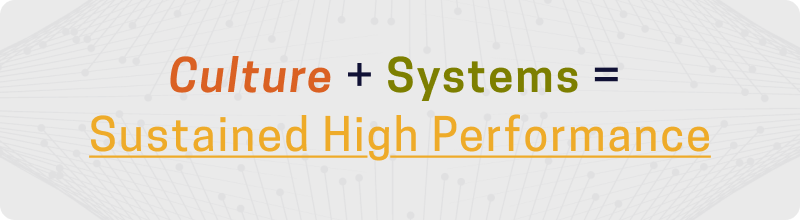
You can build a highly adaptive organization, but it will only be as strong as the character of its members. Speed is necessary. Adaptability is required. But trust and character are what endure.
Leaders must question their convictions and consider how deep their values truly go. Ask yourself:
- Am I exhibiting the behaviors I expect of my people?
- Do my decisions reflect conviction or convenience?
- Would my team describe me as someone worth following, especially when it’s hard?
As you reflect on your own contribution to the “culture + system = sustained high-performance” equation, we invite you to explore our resources from the Team of Teams 10th Anniversary collection, designed to help leaders build adaptable systems and enduring character.
Related Insights:
- Leadership Behaviors Needed in a Complex World
- Lead Like a Gardener
- Team of Teams® Executive Summary Guide
- The 4 Secrets High-Performance Organizations Know About Teams
Copyright © 2025 McChrystal Group, All rights reserved.
-
Celebrating Pinky Patel: A 2025 Marion Lindblad-Goldberg Award Nominee -Trainer

The Philadelphia Child and Family Therapy Training Center is proud to recognize Pinky Patel as a nominee for the 2025 Marion Lindblad-Goldberg (MLG) Award for Trainers. This award honors individuals who have made exceptional contributions to training and mentoring in Ecosystemic Structural Family Therapy (ESFT), fostering growth in professionals dedicated to strengthening families.
A Transformative Trainer and Mentor
For the past four years, Pinky has been a guiding force in the professional development of family therapists, particularly in Nova Scotia Cohort, where she has helped teams move beyond learning an approach to actively practicing it. As a trainer, she skillfully balances expertise with compassion, creating a learning environment where clinicians feel safe to take risks, try new interventions, and receive feedback with an open mind.
Her ability to bridge systems and perspectives makes her an invaluable trainer. Pinky recognizes the differences between treatment models in Canada and the U.S. and fosters collaborative discussions that honor these distinctions while maintaining the integrity of ESFT principles. Her professionalism, patience, and kindness allow her to support teams as they navigate challenges and refine their skills.
A Commitment to Systemic and Trauma-Informed Practice
Pinky’s deep understanding of systemic work enables her to see both the fine details and the broader horizon of treatment for the vulnerable children and families she supports. She is a strong advocate for trauma-informed, inclusive, and anti-oppressive practices, ensuring that treatment approaches align with the diverse needs of the families served.
Her work is particularly impactful in high-risk cases, where she formulates viable treatment strategies for children with complex needs. Through her teaching and supervision, she inspires clinicians to embrace the systemic lens and ecosystemic approach, helping them move beyond isolated interventions to truly transformative family work.
An Inspirational Leader in Training and Supervision
Pinky does more than train—she evokes positive change in the professionals she mentors. She creates space for learning, growth, and reflection, supporting clinicians in developing both their skills and confidence. Beyond structured trainings, she goes the extra mile to ensure that staff feel equipped and empowered to provide the highest level of care to families.
Her impact extends beyond her trainees, as she has inspired others to take on the role of trainer themselves. Through her mentorship, she strengthens not only the individual clinicians she trains but also the future of ESFT training itself.
A Well-Deserved Nomination
Pinky Patel’s dedication to systemic training, mentorship, and clinical excellence makes her a truly deserving nominee for the 2025 Marion Lindblad-Goldberg Award for Trainers. Her ability to cultivate a learning environment that is supportive, challenging, and transformative embodies the very best of ESFT.
Join us in celebrating Pinky’s well-earned recognition and the profound impact she continues to make in the field of family therapy training!
-
Celebrating T.M. Smith : A 2025 Marion Lindblad-Goldberg Award- Supervisor Nominee
The Philadelphia Child and Family Therapy Training Center is proud to recognize T.M. Smith as a nominee for the 2025 Marion Lindblad-Goldberg (MLG) Award. T.M. exemplifies the core principles of Ecosystemic Structural Family Therapy (ESFT) through his deep systemic thinking, unwavering commitment to relationship-building, and dedication to personal and professional growth.
A Systemic Thinker
One of T.M.’s greatest strengths is his ability to identify and understand patterns at every level—from the child and family to the treatment team, agency, and training cohort. His systemic lens allows him to see beyond individual behaviors, focusing instead on the broader relational dynamics at play. Whether working with families, clinicians, or supervisors, he consistently prioritizes relationships, fostering connection before guiding conversations toward meaningful systemic change.
See the Isomorph
Within the supervisory cohort, T.M. creates a space where growth and reflection thrive. He joins in distress, offering validation and support before skillfully posing systemic questions that redirect the focus to the patterns of therapeutic transactions (POTT). His approach encourages teams to step back, recognize isomorphic processes, and work collaboratively toward solutions that align with the ESFT model.
T.M. also embodies self-awareness and accountability, openly acknowledging his own POTT and continuously working to shift his own patterns. He has demonstrated remarkable balance in leadership, knowing when to step in and when to empower others to take the lead. His ability to speak to his own privilege and offer feedback with thoughtfulness and humility fosters deeper joining and open dialogue within supervisory spaces.
Use the Model
Even in times of crisis, T.M. remains model-focused, helping teams recognize patterns rather than becoming lost in content. His ability to anchor teams in the ESFT framework provides stability and clarity, ensuring that families receive the best possible support.
A Well-Deserved Honor
For his exceptional leadership, systemic insight, and unwavering dedication, we are honored to celebrate T.M. Smith as a nominee for the 2025 MLG Award. His work continues to inspire and strengthen the field of family therapy, making a lasting impact on those he serves.
-
The Power of Collective Support: What The Turnaround Teaches Us About Social Ecology and Strength-Based Practice
Netflix Link: https://www.netflix.com/us/title/81945091?s=i&trkid=258593161&vlang=en
In The Turnaround, a Netflix short documentary, we witness a rare and powerful moment in sports: a city choosing compassion over criticism. When Philadelphia Phillies shortstop Trea Turner struggled during the 2023 MLB season, the typical response might have been boos and frustration. But what happened instead was extraordinary—fan Jon McCann called for a standing ovation. The city responded. The crowd stood, cheered, and poured belief into a player at one of his lowest moments. What followed was a surge in Turner’s performance, and a deep emotional shift in how fans and athletes connected.
At PCFTTC, we see this moment as a real-world example of social ecology in action. Just like in therapy, healing and growth don’t happen in isolation. People are shaped by their environments—families, communities, systems of support. When one part of the system chooses empathy and encouragement over shame or blame, it reverberates.
Turner’s story reminds us why being strength-based and context-sensitive matters. His performance issues weren’t just about mechanics—they were about mindset, pressure, and the invisible weight of expectations. Instead of pathologizing the “problem” (Turner’s slump), the community looked at the context and chose to support rather than punish. In doing so, they acted as a trauma-informed system—offering safety, connection, and belief.
This is precisely the lens we use in Ecosystemic Structural Family Therapy (ESFT). When working with families, we don’t just treat behaviors—we look at the context that sustains them. We seek to understand before we intervene. We ask: what would happen if this family were met with belief instead of blame?
The Turnaround teaches us that systemic change begins with one choice: to hold dignity and possibility in the face of struggle. As therapists, supervisors, and healers, we can ask ourselves: how do we create our own “standing ovation” moments for the families we serve? How do we choose hope, every time?
Let this story inspire us to keep building systems of care that are trauma-informed, context-sensitive, and full of the kind of strength-based belief that can change lives.
-
More Referrals, Less Isolation: How Networking Supports Systemic Family Therapists
Therapists dedicate their lives to supporting others, but who supports them? The challenge of professional isolation is real, especially for systemic family therapists who often navigate complex family dynamics, crisis situations, and emotionally demanding cases. Without a strong professional network, therapists can experience burnout, self-doubt, and limited growth opportunities.
For many clinicians, private practice or agency work can feel isolating—especially when faced with difficult cases that require outside perspectives, additional resources, or simply the reassurance that they are not alone in their challenges. Without a solid peer network, therapists may find themselves second-guessing their interventions or struggling to find new client referrals. This not only impacts their personal well-being but also the quality of care they can provide to families.
Building a Professional Network: A Key to Growth
One of the best ways to combat professional isolation is by intentionally cultivating relationships with colleagues in the field. These connections do more than just provide emotional support—they also serve as an ongoing learning resource, a space for case consultation, and a means of growing a therapist’s referral base.
Therapists who actively participate in professional communities gain:
- Access to Peer Supervision and Mentorship – No therapist should feel like they have to figure everything out alone. Having experienced colleagues to consult on complex cases helps ensure ethical, effective care for clients.
- More Referral Opportunities – Clients need different levels and types of care. Referring clients to colleagues who specialize in certain areas fosters trust within the professional community and ensures families receive the right support. Likewise, therapists who are well-connected are more likely to receive referrals for their own areas of expertise.
- Greater Recognition in the Field – Visibility within peer networks, training institutions, and professional associations increases a therapist’s credibility, professional opportunities, and overall impact on the field.
- A Stronger Sense of Belonging – Knowing that there is a community of like-minded professionals who understand the unique challenges of systemic therapy reduces stress, prevents burnout, and enhances job satisfaction.
Breaking Free from Isolation: Practical Steps
If you’re feeling disconnected, consider taking these steps:
- Join Professional Organizations – Engage with networks like AAMFT or the Philadelphia Child and Family Therapy Training Center to build relationships and stay informed.
- Attend Training and Supervision Groups – Learning alongside peers fosters growth and camaraderie while refining clinical skills.
- Offer and Accept Case Consultations – Consulting with peers on challenging cases creates a collaborative learning environment where everyone benefits.
- Engage in Online and In-Person Communities – Whether it’s a LinkedIn group, a therapy forum, or in-person meetups, these spaces provide connection and resource-sharing.
At PCFTTC, we believe systemic family therapy is not just about supporting clients—it’s about building a strong, interconnected professional community. The more connected we are as therapists, the more effective we can be for the families we serve.
Let’s move away from isolation and toward collaboration. Together, we can build a network that strengthens both our profession and the families we work with.
-
Crisis-Ready: Managing Emergencies Through Greater Client Engagement

In systemic family therapy, crisis situations can arise suddenly, leaving therapists scrambling to respond. Whether it’s a sudden escalation of family conflict, suicidal ideation, or child welfare concerns, the ability to manage crises effectively is critical. Therapists who feel unequipped to handle these high-stakes moments may experience anxiety, frustration, and even self-doubt about their ability to intervene effectively. However, one of the most underutilized strategies for crisis prevention is actually greater client engagement.
When families are deeply engaged in the therapy process, they develop skills and resilience that reduce the likelihood of crises occurring in the first place. Engagement goes beyond just showing up for sessions—it means fostering a collaborative therapeutic alliance where clients take an active role in setting goals, identifying obstacles, and practicing new skills outside of therapy. When clients feel truly heard and understood, they are more likely to communicate struggles early, follow through with interventions, and build internal and external support systems.
How Can Therapists Enhance Client Engagement for Crisis Prevention?
- Empower Families Through Enactments – Instead of only discussing issues, enactments allow families to practice real-time interactions in session. This helps them develop new patterns of responding before a crisis occurs.
- Use Intentional Reframing – Helping clients see their struggles through a systemic lens rather than an individual failure can reduce shame and increase motivation for change.
- Develop a Crisis-Response Plan Together – Rather than waiting for an emergency, therapists can co-create structured safety plans with clients that include support systems, de-escalation strategies, and clear steps to follow in a crisis.
- Encourage Connection to Community Resources – Engaging clients with their ecosystem including extended kin, faith communities, school supports, and social services can create a more resilient safety net that prevents them from feeling isolated during difficult times.
From Crisis Response to Crisis Prevention
Too often, therapists feel overwhelmed when faced with a crisis, fearing that their interventions will not be enough. But by shifting the focus from reactive crisis management to proactive client engagement, systemic family therapists can significantly reduce emergency situations, strengthen therapeutic relationships, and improve overall treatment effectiveness.
At PCFTTC, we believe in equipping therapists with competency-based tools to create safe, engaged, and empowered families. By focusing on engagement early on, we don’t just respond to crises—we prevent them from happening in the first place.